The Ultimate Guide to Organizing Small Spaces (Room-by-Room Solutions)
Nail It Home Editorial
Living in a small space doesn’t mean you have to sacrifice style or functionality. In fact, some of the most charming and inviting homes are less than 800 square feet! But we get it—when your closet is also your office and your entryway is nonexistent, keeping things organized can feel like an unending battle against clutter.
Whether you’re in a starter apartment, downsizing to a condo, or just trying to make the most of a cozy home, the challenge is real. Where do the winter coats go? How do you store pots and pans without a pantry? It’s easy to feel overwhelmed when every surface seems to attract piles of “stuff.”
The good news? With a few strategic shifts and smart storage solutions, you can transform even the tiniest studio into a serene, organized sanctuary. This guide isn’t just about hiding messes; it’s about creating systems that work for your real life, making your small space feel twice as big.
Small Space Organization 101
Before we tackle each room, let’s establish some ground rules. These universal principles are the secret sauce to successful small-space living.
First, vertical space is your best friend. When you can’t build out, build up. Use walls for shelves, hooks, and cabinets all the way to the ceiling. Second, prioritize multi-functional furniture. A coffee table should offer storage; a sofa might need to double as a guest bed. Every piece of furniture needs to earn its keep.
Crucially, adopt the “one in, one out” rule. In a small home, inventory control is vital. If you buy a new pair of shoes, donate an old pair. Finally, remember that clear surfaces create the illusion of space. A clutter-free counter or desk immediately makes a room feel larger and airier than it actually is.
1. Entryway/Mudroom
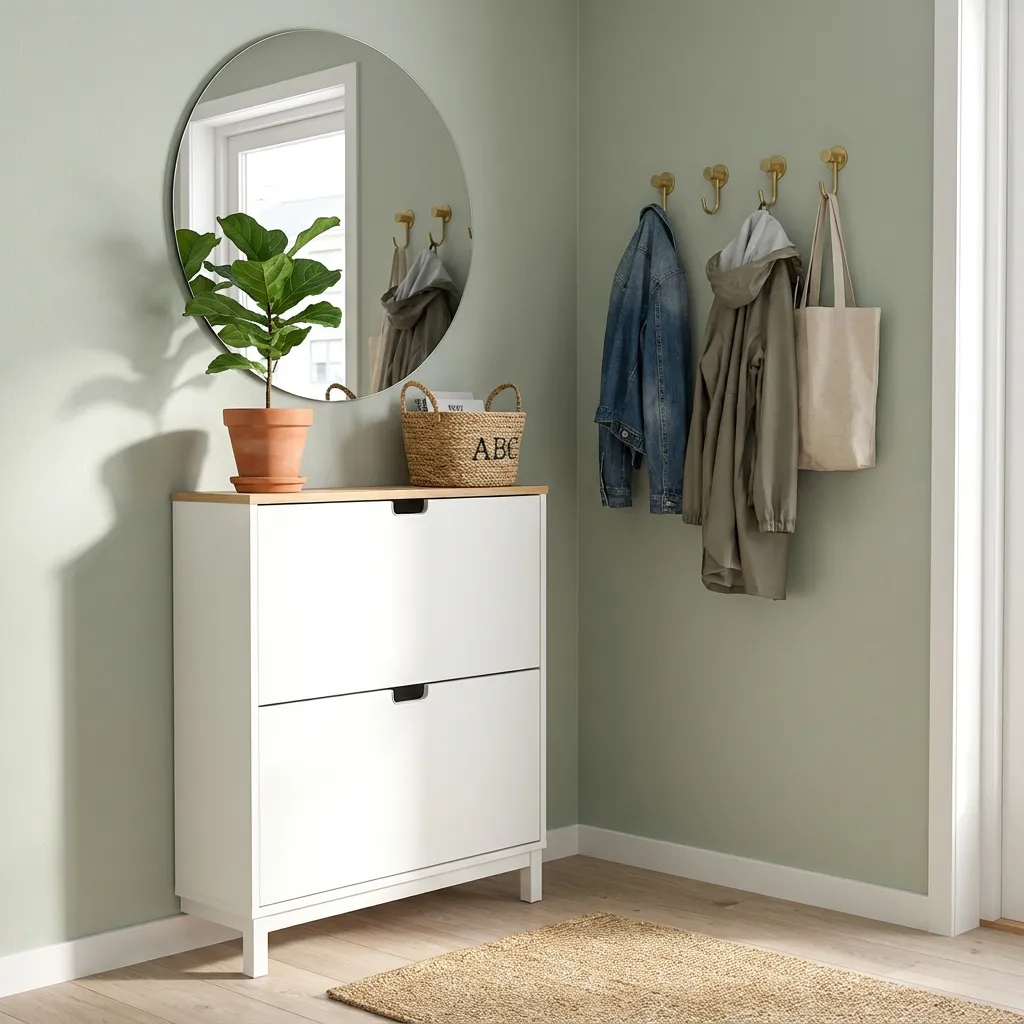
The Challenge: Most small apartments open directly into the living room, leaving no dedicated drop zone for keys, coats, and shoes. This leads to immediate visual clutter the moment you walk in the door.
Solutions:
Define the Zone
Even if you don’t have a foyer, you can create one. Use a small rug or runner to visually separate the “entry” from the rest of the living area.
- Cost: $20-$50
- Difficulty: Easy
Wall-Mounted Rocks & Rails
Skip the bulky coat rack. Install a row of sturdy hooks or a shaker peg rail on the wall behind the door. It takes up zero floor space but holds jackets, bags, and scarves.
- Cost: $15-$40
- Difficulty: Easy
Slim Shoe Cabinets
IKEA’s TRONES or HEMNES shoe cabinets are legendary for a reason. They are incredibly shallow (saving walkway space) but can swallow piles of shoes. The top surface also acts as a console table for keys and mail.
- Dimensions: ~7-9 inches deep
- Cost: $30-$150
- Difficulty: Medium (requires wall anchoring)
Floating Shelf “Console”
If you can’t fit a table, mount a narrow floating shelf at waist height. Add a small bowl for keys and a letter sorter for incoming mail.
- Cost: $15-$30
- Difficulty: Easy
Pro Tip: Add a mirror above your entry storage. It lets you check your look before leaving and bounces light around, making the cramped entry feel bigger. Quick Win: Install a simple command hook for your keys right now. No more searching!
2. Living Room
The Challenge: The living room often has to be a lounge, a dining room, and a playroom all at once. Clutter from different activities mixes together, making it hard to relax.
Solutions:
Storage Ottomans
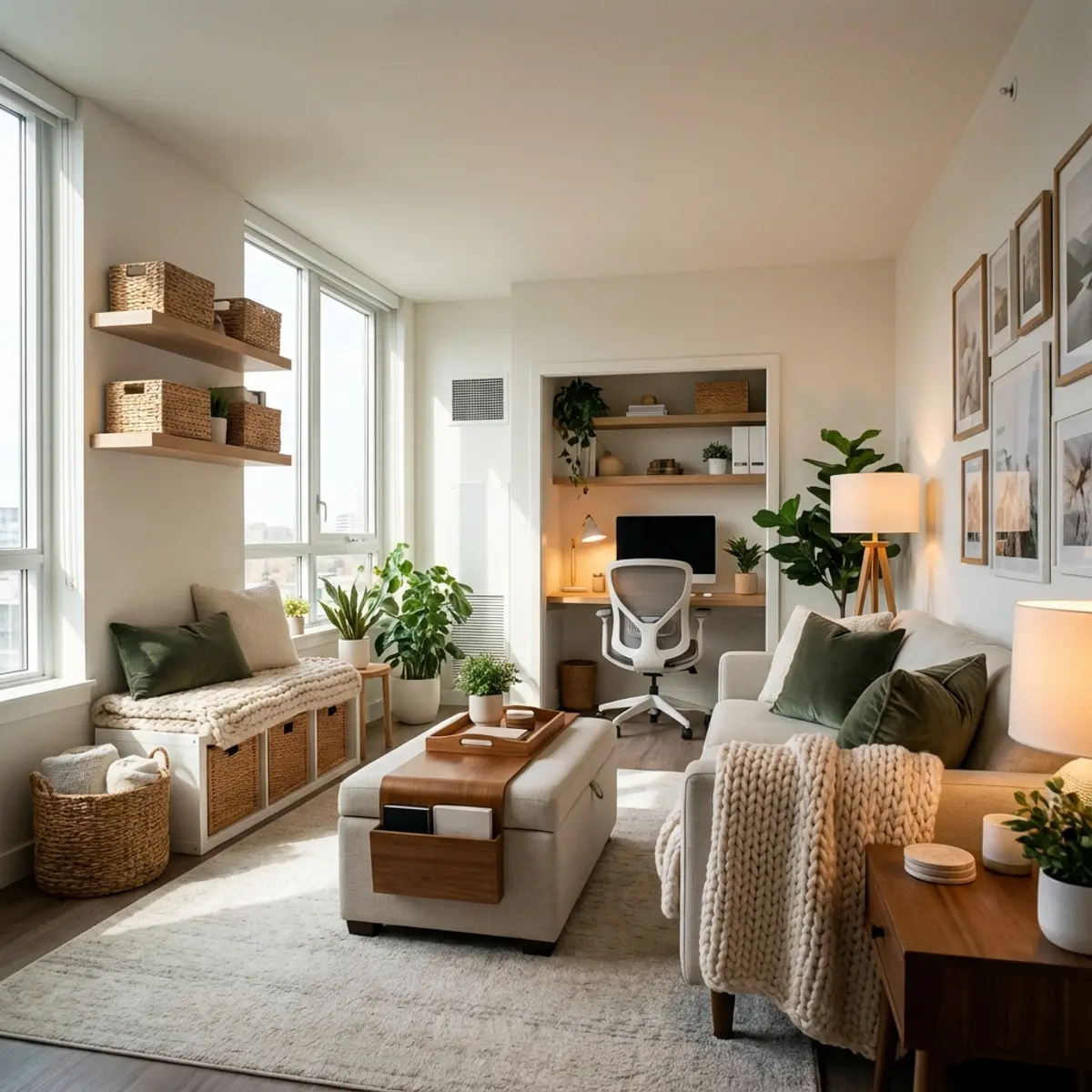
Replace a traditional coffee table or side chair with a storage ottoman. It’s the perfect place to stash extra blankets, board games, or gaming controllers.
- Cost: $50-$150
- Difficulty: Easy
Sofa Consoles
If your sofa floats in the room, place a skinny console table behind it. It provides a surface for lamps and plants without taking up “living” space, and you can tuck baskets underneath.
- Cost: $50-$100
- Difficulty: Easy
High Shelving Perimeter
Install a shelf running along the perimeter of the room, about 12 inches from the ceiling. It draws the eye up and is perfect for books and decor you don’t need daily access to.
- Cost: $40-$100 (DIY wood planks)
- Difficulty: Medium
Pro Tip: Choose furniture with “legs.” Sofas and chairs that sit up off the floor allow light to pass underneath, making the room feel less heavy and crowded. Quick Win: Clear off your coffee table. Leave only 1-2 styled items (like a candle or book) and put remote controls in a dedicated box or drawer.
3. Kitchen
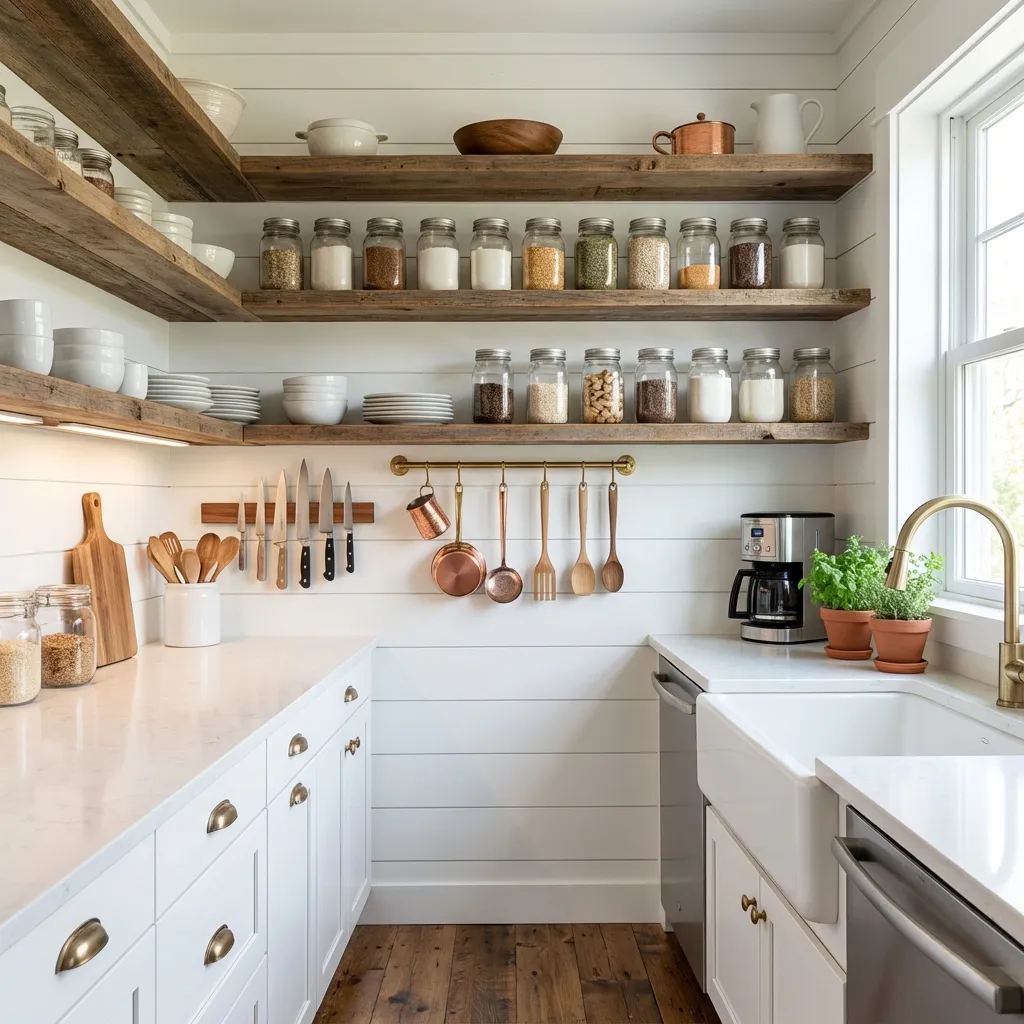
The Challenge: Lack of counter space and cabinet storage is a classic small kitchen woe. It’s hard to cook a meal when standard appliances take up every inch of prep surface.
Solutions:
Magnetic Knife Strips
Get that bulky knife block off the counter. A magnetic strip on the wall (or even on the side of the fridge) keeps knives accessible and safe.
- Cost: $15-$30
- Difficulty: Easy
Over-the-Sink Cutting Board
Create extra counter space instantly by buying (or making) a large cutting board that fits snugly over your sink. You can chop veggies right where you wash them.
- Cost: $25-$50
- Difficulty: Easy
Use Cabinet Doors
The inside of your cabinet doors is prime real estate. Use adhesive command hooks to hang measuring cups, pot lids, or cleaning gloves.
- Cost: $5-$10
- Difficulty: Easy
Rolling Utility Cart
A skinny rolling cart (like the RÅSKOG) can slide into awkward gaps. Use it as a pantry on wheels, a coffee station, or for vegetable storage.
- Cost: $30-$50
- Difficulty: Easy
Pro Tip: Decant dry goods (pasta, rice, flour) into square, stackable clear containers. Round containers waste corner space; square ones maximize it perfectly. Quick Win: Go through your “Tupperware” drawer. Throw away any container that doesn’t have a matching lid.
4. Bedroom
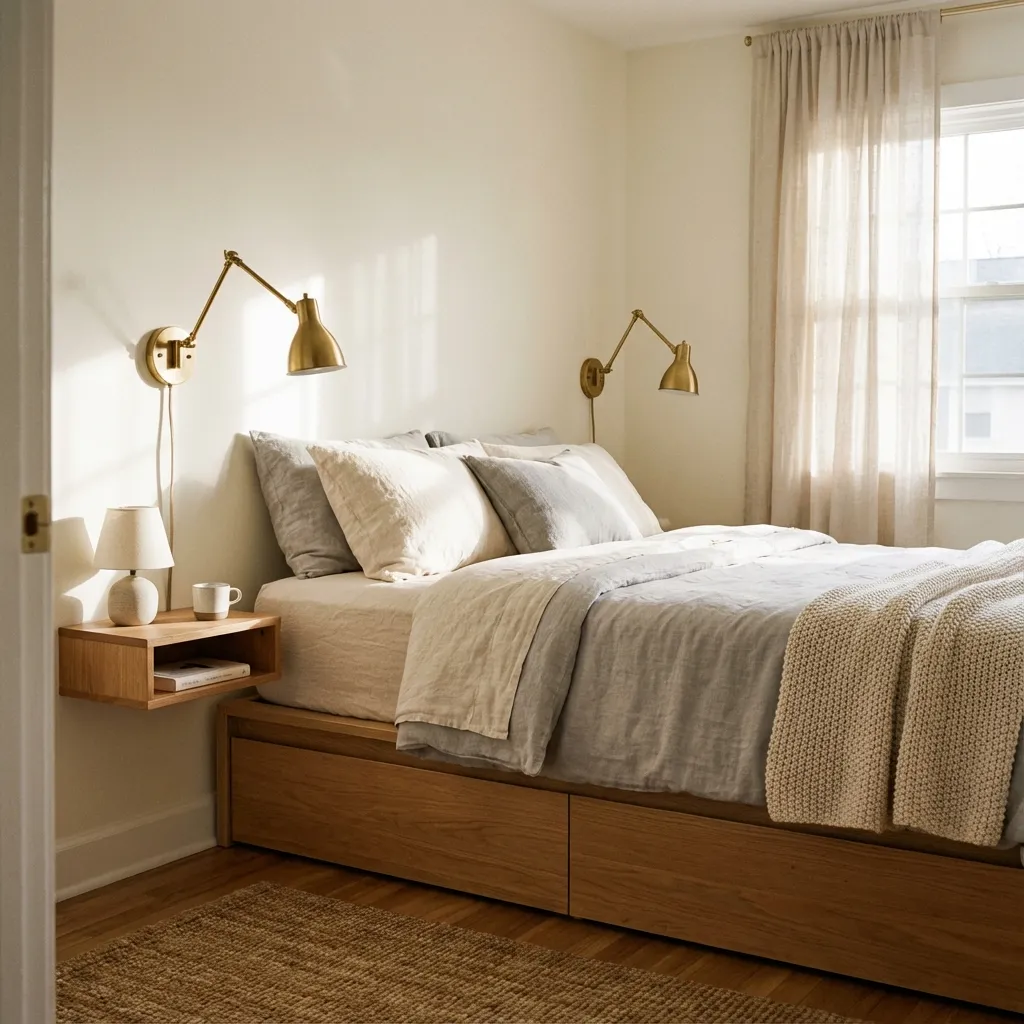
The Challenge: Small bedrooms often barely fit a bed, leaving little room for dressers. The result is “the chair” (you know the one) piling up with clothes.
Solutions:
Under-Bed Storage
This is non-negotiable. Use rolling bins or vacuum seal bags under your bed for off-season clothes and shoes. If your bed is too low, get strictly functional bed risers to create clearance.
- Cost: $20-$60
- Difficulty: Easy
Wall Sconces
Bedside lamps take up valuable nightstand surface area. Switch to plug-in wall sconces to free up space for your book, phone, and water glass.
- Cost: $40-$100
- Difficulty: Medium (installation)
Headboard Storage
Choose a bed frame with a storage headboard, or build a shelf behind the bed. It acts as a nightstand for really tight rooms where side tables won’t fit.
- Cost: Varies
- Difficulty: Medium
Pro Tip: Keep the color palette light and monochromatic. Visual chaos makes a small room feel smaller. White or light duvet covers make the bed feel like a cloud rather than a block. Quick Win: Make your bed. Immediately. It covers 40% of the room’s surface area, so if it’s neat, the whole room feels cleaner.
5. Bathroom
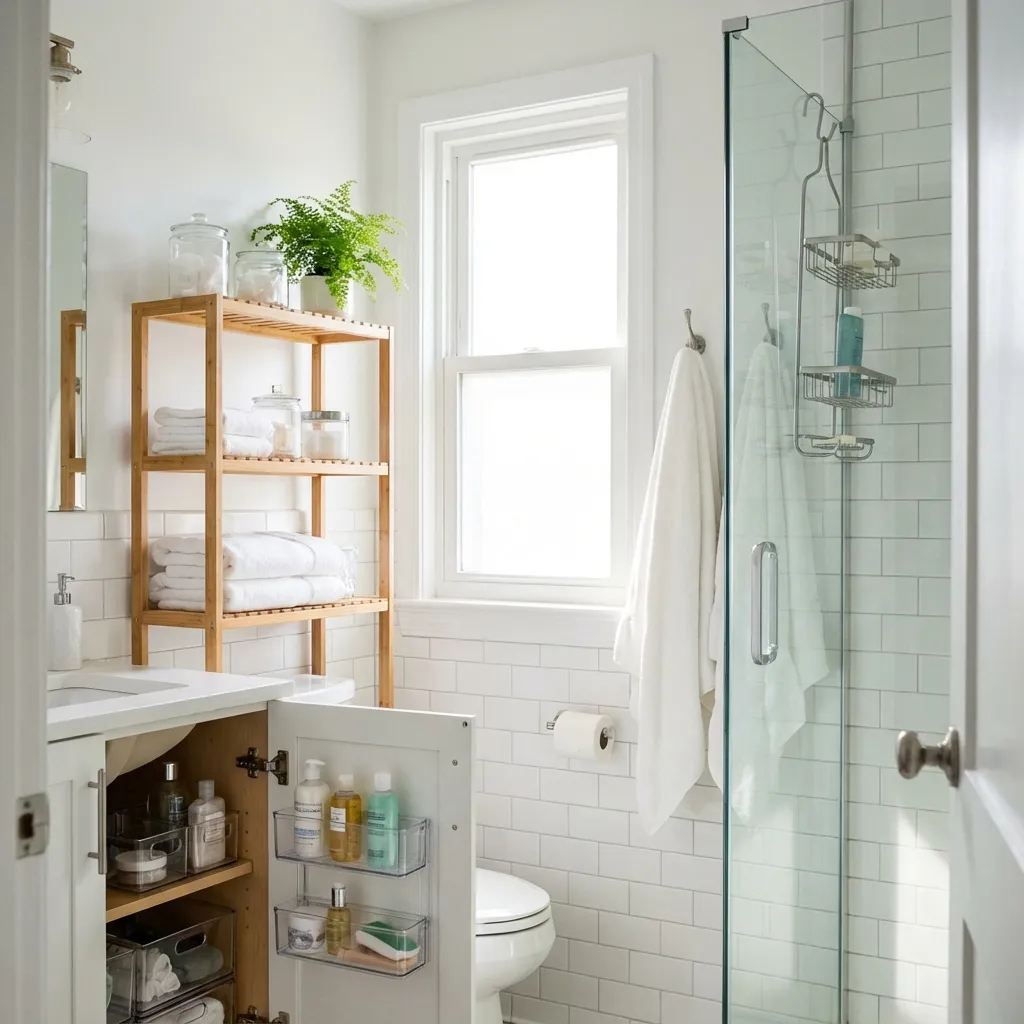
The Challenge: Pedestal sinks with no vanity storage and tiny medicine cabinets make it hard to hide toiletries.
Solutions:
Over-the-Toilet Storage
This space is often wasted. Install a shelving unit or a dedicated “étagère” over the toilet tank to hold towels, toilet paper, and baskets of toiletries.
- Cost: $30-$80
- Difficulty: Medium
Magnetic Strip for Bobby Pins
Install a magnetic strip inside the medicine cabinet door to catch bobby pins, tweezers, and nail clippers that usually get lost.
- Cost: $5
- Difficulty: Easy
Shower Caddy Tension Rod
If your shower ledge is overflowing, install a tension rod floor-to-ceiling corner caddy. It adds 3-4 shelves of storage without drilling.
- Cost: $20-$40
- Difficulty: Easy
Pro Tip: Roll your towels instead of folding them flat. They look spa-like and take up less vertical space on a shelf. Quick Win: Clear the counter. Everything that isn’t hand soap should live in a drawer, cabinet, or basket.
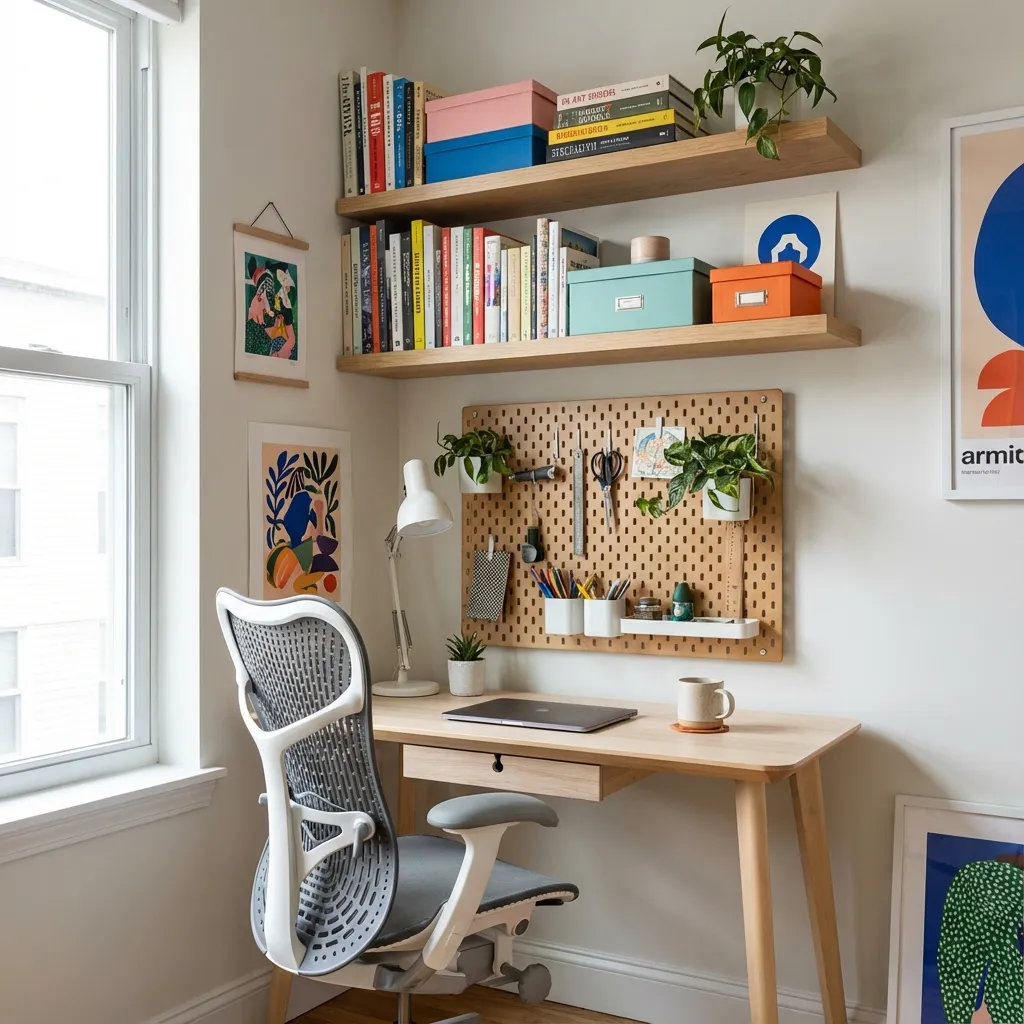
6. Home Office/Work Space
The Challenge: Fitting a productive workspace into a living room or bedroom without it dominating the relaxing vibe.
Solutions:
Closet Office (“Cloffice”)
If you can spare a closet, remove the doors (or keep them!) and slide a desk inside. When you’re done for the day, close the door or curtain to “leave work.”
- Cost: $0 (using existing desk)
- Difficulty: Medium
Vertical Monitor Mounts
Monitor stands eat up desk depth. Mount your monitor on the wall or use a clamp arm. This frees up the desk surface for your keyboard and notebook.
- Cost: $30-$60
- Difficulty: Medium
Pegboards
Pegboards are the ultimate customizable storage. comprehensive wall storage for scissors, tape, headphones, and cables. Plus, they look great.
- Cost: $20-$50
- Difficulty: Easy
Pro Tip: Wireless is worth it. Reduce visual cable clutter by investing in a wireless mouse and keyboard. Quick Win: Spend 5 minutes organizing your computer desktop and digital files. Physical clutter often mirrors digital clutter.
7. Closets
The Challenge: Standard closets have one rod and one shelf, which is terribly inefficient for modern wardrobes.
Solutions:
Double Hang Rods
Buy a “closet doubler” rod that hangs from your existing rod. Instantly doubles your hanging space for shirts and pants.
- Cost: $15
- Difficulty: Easy
Slim Velvet Hangers
Swap mismatched plastic and wire hangers for slim velvet ones. They prevent slipping and save about 30% of rod space compared to bulky wooden or plastic hangers.
- Cost: $20 for 50
- Difficulty: Easy
Door Organizers
Use the back of the closet door for shoes, belts, scarves, or jewelry. An over-the-door shoe organizer with clear pockets is a game changer for small accessories.
- Cost: $10-$20
- Difficulty: Easy
8. Laundry Area
The Challenge: Laundry “rooms” in small spaces are often just a closet or a corner of the kitchen, with nowhere to hang dry clothes.
Solutions:
Collapsible Drying Racks
Install a wall-mounted accordion drying rack. It pulls out when you need it and folds flat against the wall when you don’t.
- Cost: $20-$40
- Difficulty: Medium
Magnetic Ironing Mat
Ditch the ironing board. Use a magnetic ironing mat that sticks to the top of your washer or dryer for quick touch-ups.
- Cost: $10-$15
- Difficulty: Easy
Small Space Storage Products Worth Buying
If you’re going to spend money, spend it on these versatile workhorses:
- Over-the-Door Organizers: Use them in every room—pantry, bathroom, closet.
- Clear Stackable Bins: See what you have instantly. Great for fridges and closets.
- Tension Rods: Create dividers in cabinets or hang curtains to hide open storage.
- Drawer Dividers: Keep socks and utensils from becoming a jumbled mess.
- Rolling Carts: Mobile storage that moves where you need it.
- Under-Shelf Baskets: Slide onto existing shelves to add a new layer of storage underneath.
- Command Hooks: The renter’s best friend. Hang everything.
- Vacuum Seal Bags: Shrink bulky winter duvets and coats by 80%.
The Small Space Mindset
Living in a small space requires a shift in perspective. It’s about curation, not deprivation. It forces you to be intentional about what you own. When you pick up an item, ask yourself: Does this earn the space it takes up?
Embrace the concept of “active” vs. “passive” storage. Active items (things you use daily/weekly) deserve prime real estate (eye level, easy reach). Passive items (sentimental decor, seasonal gear) should go up high or under the bed.
Finally, afford yourself some grace. Small spaces get messy faster because there’s less floor area to spread out the mess. But they also clean up faster! A 15-minute “power tidy” before bed can reset your entire home.
Creating Your Organization Plan
Ready to reclaim your space? Don’t try to do it all in one weekend.
- Assess: Pick one room. Stand in the middle and take a photo.
- Edit: Remove everything that doesn’t belong or that you don’t love. Be ruthless.
- Measure: Measure your nooks, crannies, and potential storage spots. reliable dimensions prevent buying mistakes.
- Shop: Buy only the storage products you need for that specific room.
- Install: Put your systems in place.
- Maintain: commit to putting things back in their new homes for 2 weeks until it becomes a habit.
Frequently Asked Questions
How do I organize a small space with no storage? Focus on furniture that adds storage (beds with drawers, storage ottomans) and vertical solutions. Treat your walls as floors—install shelves high up and use hooks generously.
What’s the best way to maximize vertical space? Use tall bookcases that go all the way to the ceiling. Even the top shelf is useful for long-term storage. Over-the-door racks are another easy win.
How can renters organize without permanent changes? Command strips and hooks are essential. You can also use tension rod systems and freestanding shelving units that don’t require drilling into walls.
What should I get rid of first when decluttering? Start with trash, duplicates (do you need 3 can openers?), and broken items. Then move to clothes you haven’t worn in a year.
How do I keep small spaces organized long-term? The “one in, one out” rule is the only way to prevent clutter creep. Also, establish a daily “reset” habit where you spend 10 minutes putting things away.
Can I make a small space feel bigger through organization? Absolutely. Clearing surfaces, using light-colored storage containers, and ensuring items have “breathing room” on shelves helps a space feel expansive rather than stuffed.
What’s the biggest mistake people make? Buying storage bins before decluttering. You end up storing trash. Purge first, measure second, buy organizing products last.
Which room are you organizing first? Share your small space wins with us on Instagram @NailItHome using #NailItHomeOrganized—we’d love to feature your transformation!